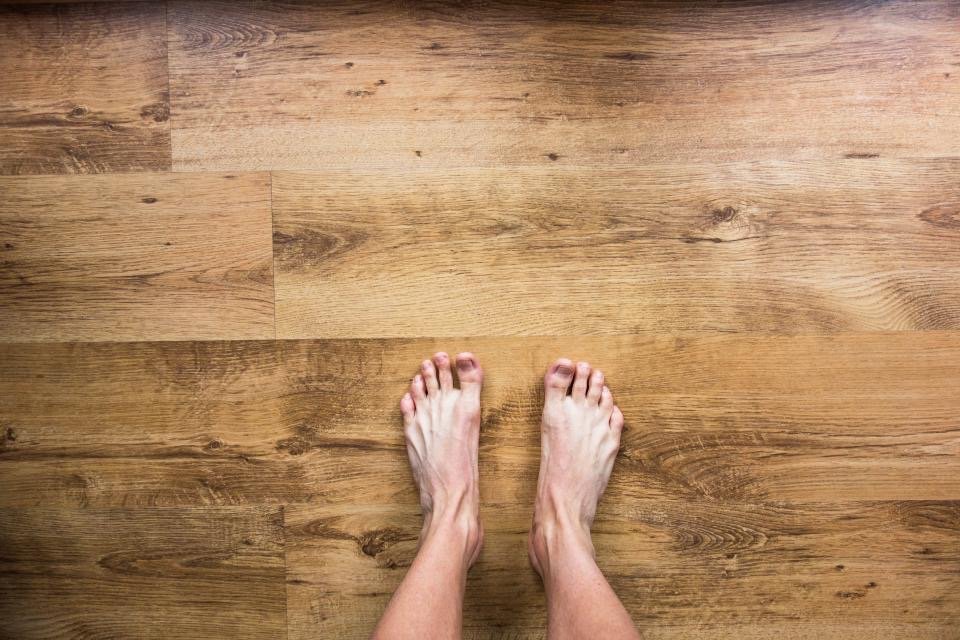
Why a daily check matters with diabetes
Over the years, high blood sugar can damage the nerves in the feet, so a cut, a blister or a stone in a shoe may not hurt the way it once would. It can also narrow the blood vessels that supply the feet, which means small injuries heal more slowly. Together, these make it easy for a minor problem to go unnoticed until it has become a serious one.
That is why international guidance on diabetic foot care, including the guidelines of the International Working Group on the Diabetic Foot (IWGDF), asks people at risk to inspect their feet every day. A daily diabetic foot check doesn't need special equipment. It needs good light, a few minutes and a habit.
Before you start
- Pick a fixed time. After your morning bath or before bed both work well. Linking it to something you already do makes it easier to remember.
- Sit down. Use a chair with a stool in front of you, not the edge of the bed. Checking while standing or balancing on one foot is how falls happen.
- Find good light. Daylight near a window is best. In the evening, use a bright lamp. Many changes in skin colour are hard to see in dim light.
- Keep a hand mirror or a phone nearby. Most people cannot see their own soles clearly, especially with stiff hips or changing eyesight.
The two-minute routine
Work through the same order every day, one foot at a time, so nothing gets skipped.
- Tops of the feet and toes. Look for redness, swelling, cuts, scratches or blisters, especially where your footwear straps or seams press.
- Toenails. Look for nails that are thick, discoloured, cracked or growing into the skin at the corners, and for redness around them.
- Between the toes. Gently spread each gap. Look for white, soggy skin, peeling, cracks or a cut. Moisture here can lead to infection.
- The soles. Use a mirror, a phone camera or a helper. Look for hard skin, corns, cracks, blisters, colour changes and any spot that looks different from yesterday.
- The heels and back of the heel. This is where dry skin often cracks, and where shoes can rub. Look for splits, especially deep ones or ones with blood in them.
- Touch and compare. With the back of your hand, feel whether one foot or one area seems warmer than the same place on the other foot. Notice any new numbness, tingling or pain.
Then look inside the shoes or chappals you'll wear today. Run a hand inside to check for stones, rough seams or anything sharp, since you may not feel it once the shoe is on.
If you can't see or reach your own feet
This is very common, and it's a good reason to ask for help rather than skip the check.
- A family member. A son, daughter, spouse or carer can look at the soles while you sit with your foot on a stool. Ask them to use the same order every day.
- A mirror on the floor. An unbreakable mirror propped at an angle lets you see your soles without bending.
- A phone photo. Take a photo of each sole and zoom in on the screen. Photos taken the same way each day also make it easier to spot slow changes.
If your eyesight is poor, ask someone else to do the check for you. Your diabetes team can also show you or your family what to look for.
Finishing with a little care
The check is also a good moment for basic care, as recommended in diabetic foot guidance:
- wash your feet daily in lukewarm water, testing the temperature with your elbow or a thermometer first, since numb feet can be scalded;
- dry them carefully, especially between the toes;
- use a moisturiser on dry skin, but not between the toes;
- cut nails straight across, or ask a podiatrist to do it if you can't see or reach them well;
- don't walk barefoot, indoors or outside, and wear socks without tight tops or thick seams.
What to do with what you find
- Same day: any wound, blister, cut or break in the skin; swelling; warmth; black, blue or very pale skin; new numbness; pus, a bad smell, or redness that is spreading. See a doctor today. If you also have a fever or feel unwell, go to a hospital.
- Within a few days: an ingrown or discoloured nail, a corn or thick hard skin, cracks that aren't getting better with moisturiser. Book your doctor or a podiatrist. Don't cut corns or hard skin yourself, and don't use corn plasters or chemical corn removers.
- Keep watching: mild dryness that improves with moisturiser, or a small mark you can explain that is getting better each day.
Whatever you find, a daily check never replaces regular foot examinations by your diabetes team, who can test the nerves and blood flow in ways you can't at home. Ask them how often your feet should be checked in the clinic.
How Pedora can help
Pedora turns this routine into a guided daily photo of both soles. It marks anything worth a closer look on a simple foot map, shows how sure it is, keeps a streak and diary, and sends anything wound-like straight to "see a doctor today". It never diagnoses or treats. That is always your doctor's job.
Sources
- International Working Group on the Diabetic Foot (IWGDF), guidelines on the prevention of foot ulcers in persons with diabetes, iwgdfguidelines.org.
- World Health Organization, "Diabetes" fact sheet, who.int.
- International Diabetes Federation, IDF Diabetes Atlas, diabetesatlas.org.
- NHS (UK), "Diabetes: looking after your feet", nhs.uk.
This guide is general information, not medical advice. Please talk to your doctor or a podiatrist about any concern with your feet.